
| Academician Xianzhu XiaAcademy of Military Medical Sciences Academician of the Chinese Academy of Engineering, a renowned Chinese veterinary virologist who has long been engaged in the prevention and control of major diseases and zoonoses in military animals and wildlife. He is a Level-1 Technical Specialist and a Specially Appointed Civilian researcher, as well as a professor and doctoral supervisor at the Military Veterinary Research Institute of the Academy of Military Sciences, China. His major academic achievements include virus isolation and diagnosis: he isolated and identified more than 10 viruses from dogs, foxes, giant pandas, lions, tigers, and other animals, and was the first in China and abroad to discover tiger influenza virus, panda coronavirus, canine distemper virus, and others, thereby establishing the existence of the causative agents of related diseases in China. He developed China’s first nationally approved live attenuated combined vaccine for dogs—the canine pentavalent live attenuated vaccine. He has led research on the diagnosis, prevention, and control of major zoonotic diseases such as rabies, avian influenza, and Ebola. He has undertaken more than 50 national, military, and provincial/ministerial research projects, focusing on disease prevention and control in military animals, endangered wildlife, and the prevention and treatment of zoonoses. He has edited and published nine books and has published more than 400 papers and filed 27 patent applications. |
| Prof. Ram Bilas PachoriIndian Institute of Technology Indore, India Title: Automated detection of EEG signals for medical applications Prof. Ram Bilas Pachori's research interests include signal and image processing, biomedical signal processing, non-stationary signal processing, speech signal processing, brain-computer interface, machine learning, and artificial intelligence and the internet of things in healthcare. He was an Associate Editor of IEEE Transactions on Neural Systems and Rehabilitation Engineering (2021-2024). Currently, he is an Associate Editor of Electronics Letters, IEEE Open Journal of Engineering in Medicine and Biology, Computers and Electrical Engineering, and Biomedical Signal Processing and Control. He is also serving as a Handling Editor of Signal Processing and an Editor of IETE Technical Review journal. He is a Fellow of IETE, IEI, and IET. He has authored the textbook titled “Time-Frequency Analysis Techniques and their Applications” (CRC Press, 2023). He has 349 publications, which include journal articles (219), conference papers (91), books (11), and book chapters (28). He has also eight patents, including two granted (Australian patent and Indian patent) and six published (Indian patents). His publications have been cited approximately 17500 times with h-index of 72 according to Google Scholar. |

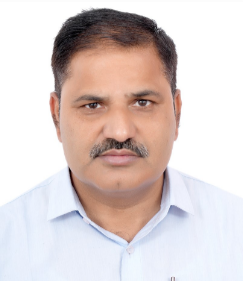
| Prof. Ming ChenZhejiang University, China Title: AI-Powered Multi-Omics Integration & Bioinformatics Engineering for Chronic Disease Management Prof. Ming Chen is the director of the Bioinformatics Laboratory at the College of Life Sciences and is the leading figure in the field of bioinformatics at Zhejiang University, China. He obtained his Ph.D. in bioinformatics from Bielefeld University, Germany, in 2004. He was seconded to the Fundamental Research Department of the Ministry of Science and Technology, served as president assistant, and was specially appointed dean at Inner Mongolia Minzu University. Prof. Chen's research work covers bioinformatics, systems biology, non-coding RNA transcriptomics, and precision medicine. He has published over 200 academic papers in peer-viewed journals such as Cell, Nature, Nucleic Acids Research, Bioinformatics, etc., with a Google Scholar H-index of over 50. He has been included in the list of the top 2% of scientists in the world. |
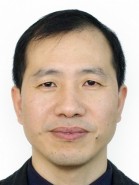
| Prof. Bin LiuDalian University of Technology, China Title: Case Sharing of Clinical Engineering Based on Intelligent Graphic and Image Processing Prof. Liu, a professor at Dalian University of Technology, a doctoral supervisor, a visiting professor at Dalian University Affiliated Hospital, a member of the Higher Education Committee of the Ministry of Education, the director and technical leader of the Key Laboratory of Medical Simulation Technology in Liaoning Province, a standing committee member of the Chinese Research Hospital Society's Neuroregeneration and Repair Professional Committee, a member of the 3D Printing Technology Branch of the China Biomedical Technology Association and so on. His main research directions include computer vision and graphics images, intelligent medical image processing and analysis, computer-assisted three-dimensional preoperative planning and simulation. He has led 1 project of the National Key Research and Development Program of the Ministry of Science and Technology for the "14th Five-Year Plan", 4 projects of the National Natural Science Foundation of China, and over 20 provincial and ministerial-level, and commissioned projects. He has published over 70 international journal papers as the first author or corresponding author, and has obtained over 30 national invention patents as the first complete person, and over 40 software copyrights. He serves as a member of the editorial board of several international journals such as "The International Journal of Medical Robotics and Computer Assisted Surgery", and is an expert in the review of key projects of the National Natural Science Foundation of China, special projects, face projects, and young projects. |
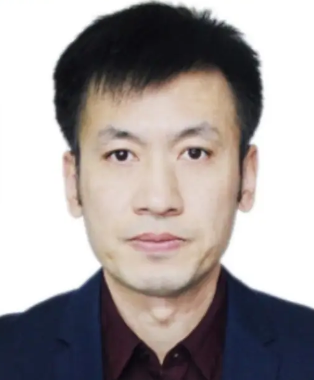
| Zhengju ChenBeijing Baiti Biotechnology Co., Ltd., China Title: Innovations in In Vivo CAR-T Therapy and Its Application in Solid Tumor Treatment The CEO of Beijing Baitai Bio, a researcher in nucleic acid drug development based on nanocarriers at Pulue Medical Translational Research Institute, holds a Ph.D. from Peking University Health Science Center and completed postdoctoral research at Peking University. He is a specially appointed expert of Zhongbolian. With many years of dedicated experience in the field of nanocarriers and nucleic acid drugs, he has worked at key laboratories under the Ministry of Education and national key laboratories. Leveraging a solid academic foundation, he has published over ten academic papers in high-impact journals. He leads a team conducting extensive research and translational work on nucleic acid drugs, spearheading the development of more than ten related technological invention patents. He also possesses rich experience in initiating and completing major national projects and grants from the National Natural Science Foundation, and leads multiple national-level nucleic acid drug development projects within the company. In addition, he serves as a long-term consultant for several medical expert teams. By combining expertise in academia, industry, and resources, he continuously drives innovation and clinical translation of nucleic acid drug development in the company. |